
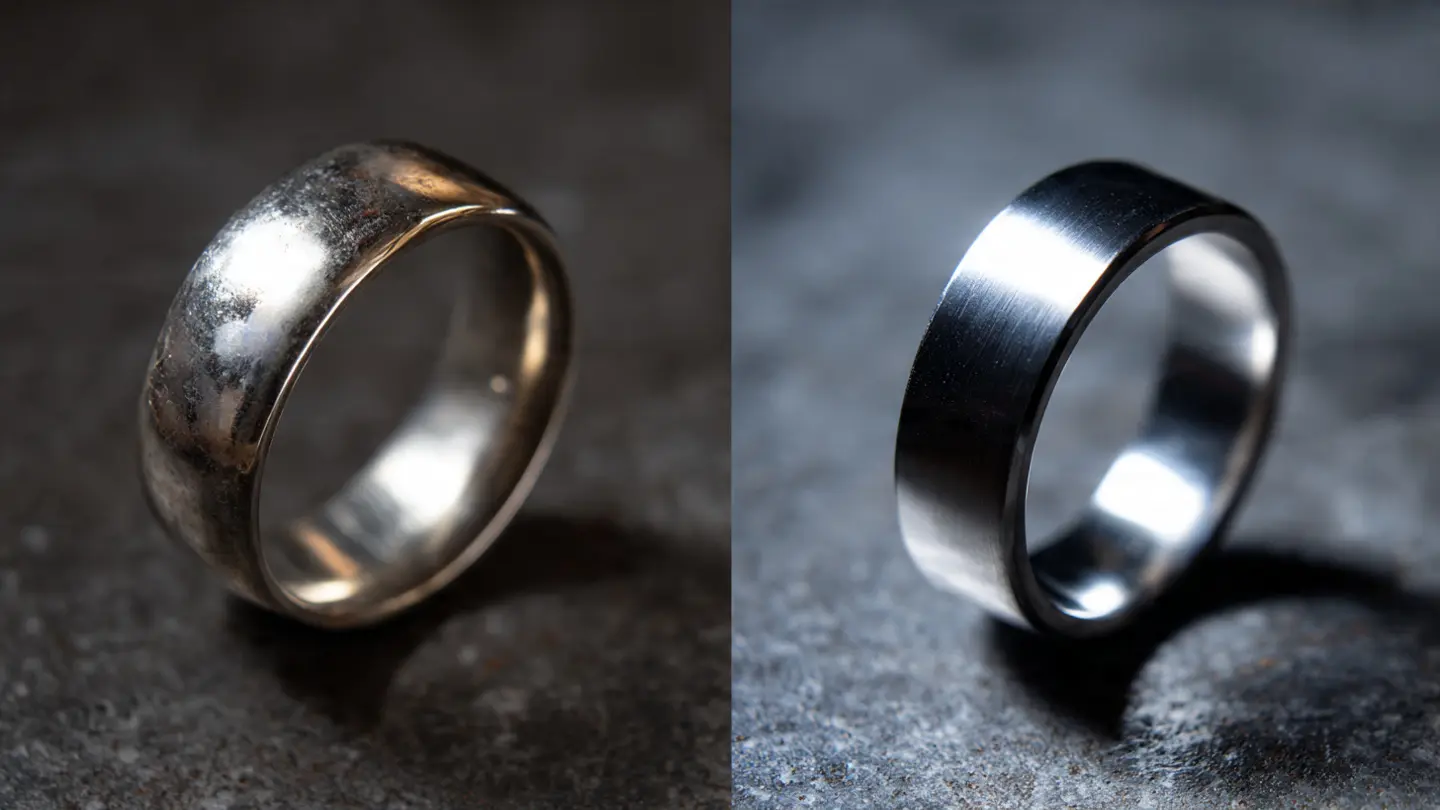
A primera vista, pueden parecer similares: ambos son metales “plateados”. Sin embargo, en el mundo de la joyería, la distancia entre la Plata de Ley 925 y el Acero Quirúrgico es abismal.
1. Metal Precioso vs. Aleación Industrial
La plata (Ag) es un metal noble, escaso en la naturaleza y con un valor intrínseco. El acero es una aleación industrial abundante.
- Tu joya de plata tiene valor real: Si fundes una joya de plata, el material resultante sigue teniendo valor monetario. El acero no.
2. Maleabilidad y Arte
La plata es un metal blando y maleable, lo que permite a nuestros orfebres en Bogotá crear detalles intrincados, engastes de piedras preciosas y diseños curvos complejos. Una joya de plata es arte manual; el acero suele ser producto de maquinaria industrial en serie.
3. El Brillo (Lustre)
El ojo entrenado nota la diferencia al instante.
- Plata: Tiene un brillo blanco, cálido y profundo (“Lustre Lunar”). Refleja el 95% de la luz visible.
- Acero: Tiene un tono más grisáceo, frío y “duro”.
4. Reparabilidad
Si una joya de plata se rompe, un joyero puede soldarla, pulirla y dejarla como nueva. Si una pieza de acero se daña, generalmente es irreparable.
At first glance, they may seem similar: both are “silver-colored” metals. However, in the world of jewelry, the distance between 925 Sterling Silver and Surgical Steel is abysmal.
1. Precious Metal vs. Industrial Alloy
Silver (Ag) is a noble metal, scarce in nature, and with an intrinsic value. Steel is an abundant industrial alloy.
- Your silver jewel has real value: If you melt down a silver jewel, the resulting material still holds monetary value. Steel does not.
2. Malleability and Art
Silver is a soft and malleable metal, allowing our goldsmiths in Bogotá to create intricate details, gemstone settings, and complex curved designs. A silver jewel is manual art; steel is usually the product of mass industrial machinery.
3. The Shine (Luster)
The trained eye notices the difference instantly.
- Silver: Has a white, warm, and deep shine (“Lunar Luster”). It reflects 95% of visible light.
- Steel: Has a grayer, colder, and “harder” tone.
4. Repairability
If a silver jewel breaks, a jeweler can solder it, polish it, and make it look like new. If a steel piece gets damaged, it is generally irreparable.